A Recipe for Friendship 🍓 | A Cozy Story About Female Friendship

Some friendships seem to arrive all at once.
You meet someone and immediately feel that you’ve known them forever. You can talk for hours, laugh at the same things, and find yourself making plans together almost before you have learned many details of one another’s lives.
But some friendships arrive much more quietly.
They begin with a walk.
A shared cup of tea.
A conversation that lasts a little longer than expected.
Someone pointing out a beautiful view and waiting to see if you notice it too.
Friendship growing is beautiful in any way that it happens. They don’t necessarily announce themselves. There isn’t always a particular moment when you can say, This is when we became friends. Instead, closeness gathers gradually, almost imperceptibly, until one day you realize that you have begun looking for this person when something beautiful happens.
Maybe that’s one of the best forms of intimacy: having someone you want to share things with.
Not necessarily the biggest things, either. Often it’s the smallest discoveries that create the strongest bonds. A path you have walked many times that suddenly looks different because you are walking it with someone else.
Friendship often grows through these ordinary moments because they give us the opportunity to pay attention.
When we are getting to know someone, we begin noticing what makes them curious, what makes them laugh, what makes them stop and look more closely. We learn the things they notice that we might have walked straight past. In time, their way of seeing the world becomes familiar to us.
And we begin to see a little differently ourselves.
I think there is also something particularly meaningful about walking with someone. When two people walk side by side, there is no expectation that they must constantly look at one another. There can be stretches of silence. There is room to notice the landscape, to think, to let a conversation wander wherever it wants to go.
Sometimes the most comfortable friendships are the ones where silence doesn’t need to be filled.
There is no performance required.
You can simply be there.
Food has its own way of creating this kind of closeness, too. We share recipes, bring someone a piece of something we’ve baked, pick berries together, or sit down over a meal that took a little time to prepare. A recipe can become more than a set of instructions. It can carry a memory of a particular kitchen, a particular afternoon, or a particular person.
Maybe that’s why recipes are so often passed from one person to another.
We aren’t only sharing something to eat.
We’re sharing a small experience that can continue beyond us.
That idea stayed with me while I was writing this week’s story, A Recipe for Friendship. It began with a movie I’d watched about a growing relationship, art, the landscape above the sea, and the quiet ways two people can come to know one another. Somewhere along the way, a recipe became part of it, too.
And perhaps that is fitting.
Because friendship itself can feel a little like a recipe.
There may be no exact measurements. No instructions that work for everyone. But there are a few ingredients that seem to matter: time, curiosity, attention, kindness, and the willingness to keep showing up.
Sometimes, sharing something sweet helps, too.
🆓 Join The Slow Life newsletter to receive the FREE Slow Morning micro-experience when you sign up. 🌿 Sign up HERE 🌿
🪴 Looking for more cozy inspiration? Visit my Cozy Finds page for books, puzzles, and other favourites I’ve curated.
🎧 💜 Prefer to listen instead of read? - Listen to the podcast version of “A Recipe For Friendship” HERE 🎧
This story is called A Recipe For Friendship, and it’s about a changing expression, the path above the cliffs, and a travelling recipe.
I turn the page in the novel, and she, the Painter, is walking along the cliffs with the Woman.
They’ve been walking together for weeks now, although neither remembers exactly when the walks began. The Woman’s mother had commissioned the Painter to paint her daughter’s portrait before the summer was over, and she had arrived one late afternoon after a long journey along the coast, carrying her paints and canvases into a house that stood alone above the sea.
The Woman to be painted knew what she was coming to do.
She had been courteous to the visitor but almost impossible to get to know.
During the first sitting, she had remained perfectly still near the window, answering questions when they were asked and saying nothing when they were not. She seemed to regard the portrait as an unwanted obligation.
The Painter herself had expected this.
What she hadn’t expected was how much she would notice.
The Woman’s expression changed when the gulls cried outside. Her eyes wandered toward the water whenever the wind came through the open window. When she thought no one was watching, she sometimes smiled to herself, as though remembering something that belonged entirely to her.
The Painter began with the outline.
She told herself she was only doing her work.
Still, she found herself looking for those small moments when the Woman forgot she was being painted.
The first walk happens almost by accident.
The Painter has finished for the afternoon, and the Woman offers to show her the path above the cliffs. The path winds through long grass and low shrubs before opening onto a wide view of the ocean.
They walk together.
The Woman knows the coast intimately. She points out places where the rocks become slippery after rain, the narrow path that leads down toward the beach, and the sheltered places where flowers grow despite the salt and the wind.
After that, they begin walking more often.
The Woman is different outside the house.
Away from the portrait and other expectations, she seems lighter. She points out everything that catches her eye. A pink shell half hidden beneath the sand. A bird circling above the water. The particular colour the ocean takes before a storm.
The Painter watches and listens.
Their friendship grows quietly, without either of them deciding that it’s happening.
In their dresses, they sit on the cliffs in the late afternoon and watch the waves crashing against the rocks below until the light begins to fade.
One day, the Woman stops among the grasses above the beach and kneels.
The Painter wonders as she searches beneath the leaves until she finds what she’s looking for.
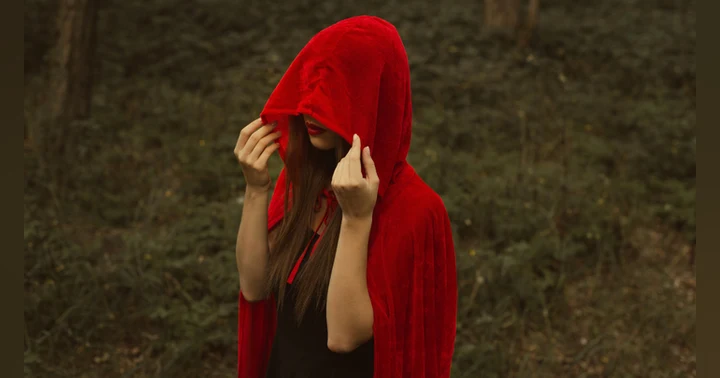
Wild strawberries grow close to the ground, scattered between the grasses. Both women gather them carefully, one at a time, placing them in the folds of their cloaks.
They eat them as they walk.
The berries’ sweetness is concentrated by their tiny size, and they laugh at how intensely they taste.
From then on, they look for them whenever they walk along the coast.
Sometimes they return to the house with enough to fill a small bowl.
The Painter begins to understand why the Woman loves this place. It isn’t grand in the way of gardens and estates. Things reveal themselves here only when someone takes the time to look closely.
The portrait changes as the Woman does.
At first, the Painter sees the Woman sitting formally before her, composed and distant. But as the weeks pass, she finds herself waiting for the moments in between.
She paints the way she looks toward the sea.
She paints the softness that washes over her face when she’s listening to a story.
She paints the faint smile that appears when she remembers something pleasant.
One morning, while the Painter is working, the Woman brings a small bowl of strawberries into the room and places it beside the window.
The bowl remains there for the rest of the sitting.
I pause here in my reading.
Peeking out of the book is the piece of paper that had fallen out when I brought it home from the library. I’ve been using it as a bookmark without looking at it closely.
I pull it free and turn it over in my hand.
It’s a recipe card, slightly worn at the edges, with the handwritten ingredients for a strawberry dessert. There is no name on it, no date, nothing that tells me who wrote it or how it came to be inside this particular book.
I tuck the card back between the pages and continue reading.
The women walk farther this time.
They go down to the beach in the mornings, when the sand is still damp and the tide has left small pools among the rocks. They gather shells. They look for the tiny strawberries in the grass. They sit together above the cliffs whether it’s warm or chilled by strong winds.
The Woman has softened.
The Painter has begun to know her.
The portrait nears completion, and the final sitting comes on a day when the sea is unusually calm.
The Woman sits near the window.
The Painter has placed a bowl of wild strawberries beside her.
When she finally steps back from the canvas, she realizes that somewhere along the way she has stopped painting a person she was commissioned to paint and begun painting the friend she has come to know.
I turn another page and take a break from reading. I copy the recipe onto a card of my own and follow it while the pastry bakes, the strawberries becoming glossy and bright as they warm. When it’s finished, I carry a slice of the dessert back up to my reading nook.
The novel is waiting beside me.
The original recipe card tucked within.
When I return the novel to the library in a few days, I’ll leave the recipe where I found it, for someone else to discover.
Perhaps they’ll wonder how it came to be there, or perhaps they’ll knowingly use it to hold their place.
They’ll find the strawberries in the novel, scattered throughout the story almost unnoticed at first, growing wild along the coast where the two women walk together.
And maybe the recipe will keep travelling with the story, passed from one reader to another, carrying with it a little piece of everyone who has stopped to make it.
I wish you sweet dreams.
🆓 Join The Slow Life newsletter to receive the FREE Slow Morning micro-experience when you sign up. 🌿 Sign up HERE 🌿
💃 Wear the Thing: Enjoying What You Love Without Explaining Yourself

