Missing Key: The Cozy Mystery of Antique Shopping
Antique shops naturally have a way of making people curious.
Not just about the objects themselves, but about the lives they once belonged to.
Unlike most modern stores, where everything arrives brand new and identical to the next item on the shelf, antique shops are filled with things that have already been part of someone’s story. A teacup might have once sat on a small kitchen table beside a window. A watch may have been worn every day for years, its quiet ticking marking ordinary moments that mattered deeply to someone. A piece of jewellery could have been chosen carefully for a celebration, or given as a gift long ago.
When we wander through places like this, it’s hard not to imagine those things.
We pause in front of a shelf and find ourselves wondering who owned a certain brooch, or who once opened the drawers of a small wooden box. We picture the homes these objects might have lived in, the rooms they once sat in quietly, long before they found their way to a shop where strangers now walk past them every day.
Most of the time, those stories are impossible to know.
Perhaps the shop owner has heard a detail or two from someone who brought the item in. Perhaps there’s a small handwritten tag tied to it with a bit of twine. But often there is very little information at all. Just the object itself, carefully placed among other treasures with unknown pasts.
And in a way, that mystery is part of the beauty.
Without a full story, the mind begins to fill in the missing pieces. We imagine the hands that held a porcelain cup, or the careful handiwork that went into carving a wooden lid or setting a row of tiny stones into a bracelet. Objects that have lasted for decades carry a sense of wonder with them, as though someone, somewhere, once valued them enough to keep them safe.
Walking through an antique shop becomes less like shopping and more like wandering through a collection of small, unfinished stories.
Most of the time, we admire a few things and move along.
But every once in a while, something makes us stop.
It might be an unusual colour, a delicate piece of detail, or simply a feeling that an object is somehow different from the rest. We pick it up, turn it gently in our hands, and take a closer look. For a moment, the curiosity that fills places like these settles in even more deeply.
Where did this come from?
Who chose it the first time?
What was going on in the world and in their life when they first saw it?
And how, after all these years, did it end up here?
The story I’m sharing today begins on a rainy afternoon, during a slow wander through a small antique shop, where one particular object stands out among the rest.
🆓 Join The Slow Life newsletter to receive the FREE Slow Morning micro-experience when you sign up. 🌿 Sign up HERE 🌿
🎧 💜 Prefer to listen instead of read? - Listen to the podcast version of “Missing Key” HERE 🎧
🕯 💜 SHOP The Slow Life HERE 💌
This story is called Missing Key, and it’s about the mood to wander, the charm in mystery, and a far-fetched idea.
The antique shop is small, tucked into the corner of the village square, its storefront windows filled with trinkets that catch the shadows of the raindrops that slide down the glass.
I’m in the mood to wander today, even though the weather is wet, and this is where my steps have taken me.
I pull open the door to hear soft music mingling with quiet conversation between the shop owner and some patrons. I say hello to the staff member close by as he carefully dusts some porcelain figures on a shelf. He takes his time to do this task well, pausing once in a while, as an artist would to look at their painting so far, tilting his head to one side as he replaces each item just so. It’s comforting to know that these things waiting for new homes are not haphazardly piled up and forgotten in the mean time.
I continue my loop around the outer edge of the shop, touching a dress with thousands of beads sparkling with every movement of the fabric. This beautiful piece of clothing still exists so that more people can enjoy the hours of artistry put into it by someone’s skillful hands.
After a full circle, I browse through one of the middle aisles, in no rush to go back out into the rain. I love the mishmash of items, but everything is right where it should be. I reach some jewellery boxes, all fancy in their own way, and one is especially ornate.
I run my hands over the top of it in disbelief that it’s made out of wood. The base colour is a deep elegant blue, almost metallic with its shine. The raised golden detailing drips down the sides and even down the back, which lets me know this was not cheaply made.
The drawers are equally as decorated and adorned with miniature handles. I try to slide each one open, but they seem to be locked, as none of them budge.
I put my hands on either side of the box and pick it up. Although I know it’s well made, it’s heavier than I was expecting.
I carry it to the counter, peeking at the underside to see if the key is taped to the bottom. The shopkeeper confirms that there was never a key with it when they took over ownership of the shop years ago. She assures me that’s the only reason it’s still here, because she’s never seen a more beautiful jewellery box. She adds that if I ever get it open, whatever’s inside is mine.
I take a minute, the collection of wrist and pocket watches softly ticking the passing time under the glass countertop.
I decide I don’t need it to open just yet. The mystery is part of its charm. I pay for the beautiful thing and take it home.
Knowing just where I want to put it for now, I take it over by my favourite chair, where I sit to read, and place it on the side table. Before getting myself something to eat, I try a few things—a bobby pin, tweezers—but the locks stay closed. Whatever is inside will have to stay there for another night.
I dream of the jewellery box throughout my sleep and try some more hairpins in the morning, to no avail. The mystery continues, but the beauty of the box itself makes me smile.
Out the front window, I see my grandmother coming up the walk, so I put the kettle on. Rain is on the docket for today as well, and she’s dressed in her coat and rain bonnet.
I welcome her inside, presenting her with a pair of slippers set aside for her visits. She shakes off the chill and straightens out her favourite shirt with the pink roses on it. Her earrings are tiny roses as well. She has on the necklace she usually wears with charms that she’s added over time.
We sit with some tea at the bistro table in the breakfast nook to be close to the rain we both love to watch.
“That’s a pretty thing,” she says, pointing at my new jewellery box. I tell her where I found it and that unfortunately its key is missing.
She retells the story of how her mother had moved a long distance away from here as a child, and some things just couldn’t be taken along. Her beautiful jewellery box being one of them. It had been stored but eventually, was lost in time.
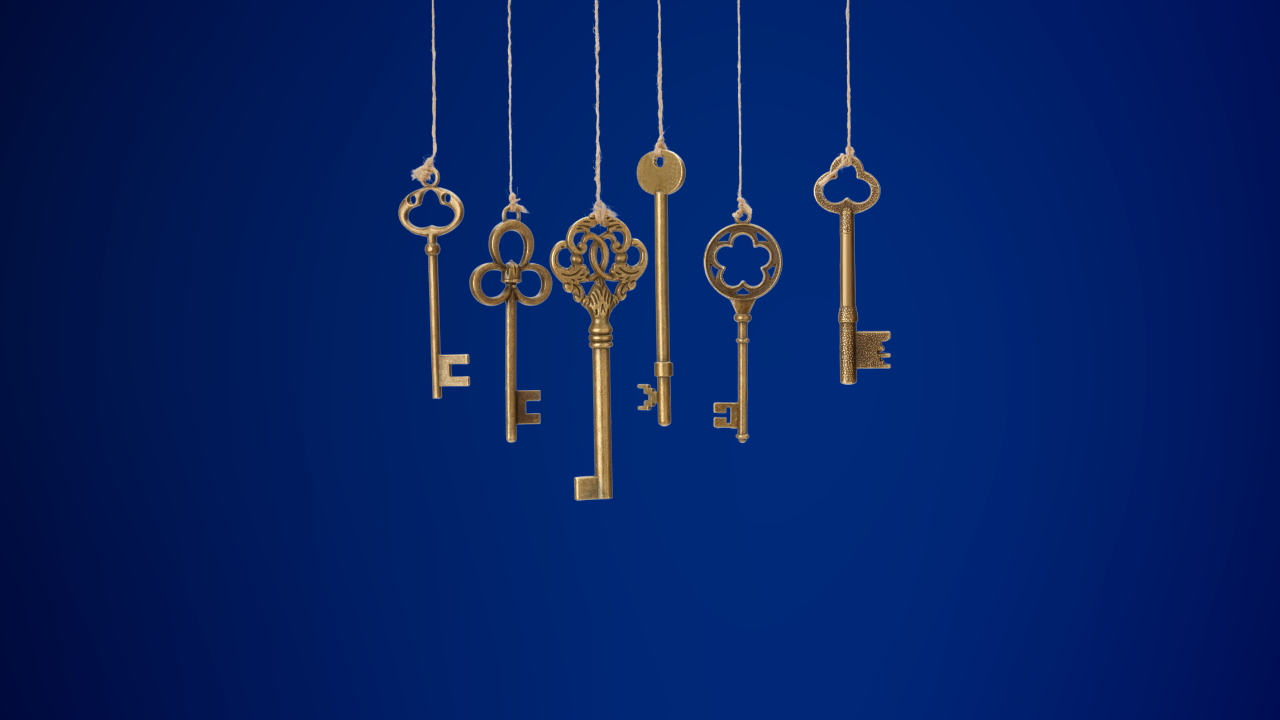
She turns back towards me, reaching for the teapot, and her necklace swings forward. My eyes catch on it for the first time—a tiny, old-fashioned key. My breath catches, but I realize how far-fetched the idea would be. Still, I ask her where she got the key. She puts her fingers around it.
“My mother”, she whispers, and we look at each other, eyes wide with realization and hope.
“Shall we?”, I ask her, getting up to bring the large jewellery box over to sit between us.
She unclasps the chain, handing it to me. The key is small but sturdy. I start with the top drawer and press the key into the lock. It fits.
For a second, neither of us moves. Then, slowly, I turn the key. There’s a soft click, and the lid rises, as it’s not a drawer at all.
Inside, it’s lined with velvet. Nestled in the centre is a tiny mechanism. This is not just a jewellery box. It’s a music box as well.
We see that to wind it the same key must be inserted and turned. My grandmother nudges me to try it. It resists for a moment, giving only a few tiny plinks of sound, but then—music.
She closes her eyes, listening, and I can tell she knows the song.
When the music fades, my grandmother opens her eyes. She looks at me, the corners of her mouth turned up.
“I think it was meant to find you”, she says, and removes the key from her chain to put into my hand. I hesitate and offer for her to take the box home with her instead, but she seems happy with this.
We unlock the drawers one by one and find the most beautiful things. I do insist that she takes whichever pieces she wants, and we decorate her with rings, bracelets, more necklaces, and a brooch with a tiny pink rose.
I wish you sweet dreams.
🆓 Join The Slow Life newsletter to receive your FREE Slow Morning micro-experience when you sign up. 🌿 Sign up HERE 🌿
🫙 Cleaning the Pantry 🧹 | Organizing is Calming