Watering the Indoor Houseplants: A Quiet Rhythm of Care and Attention
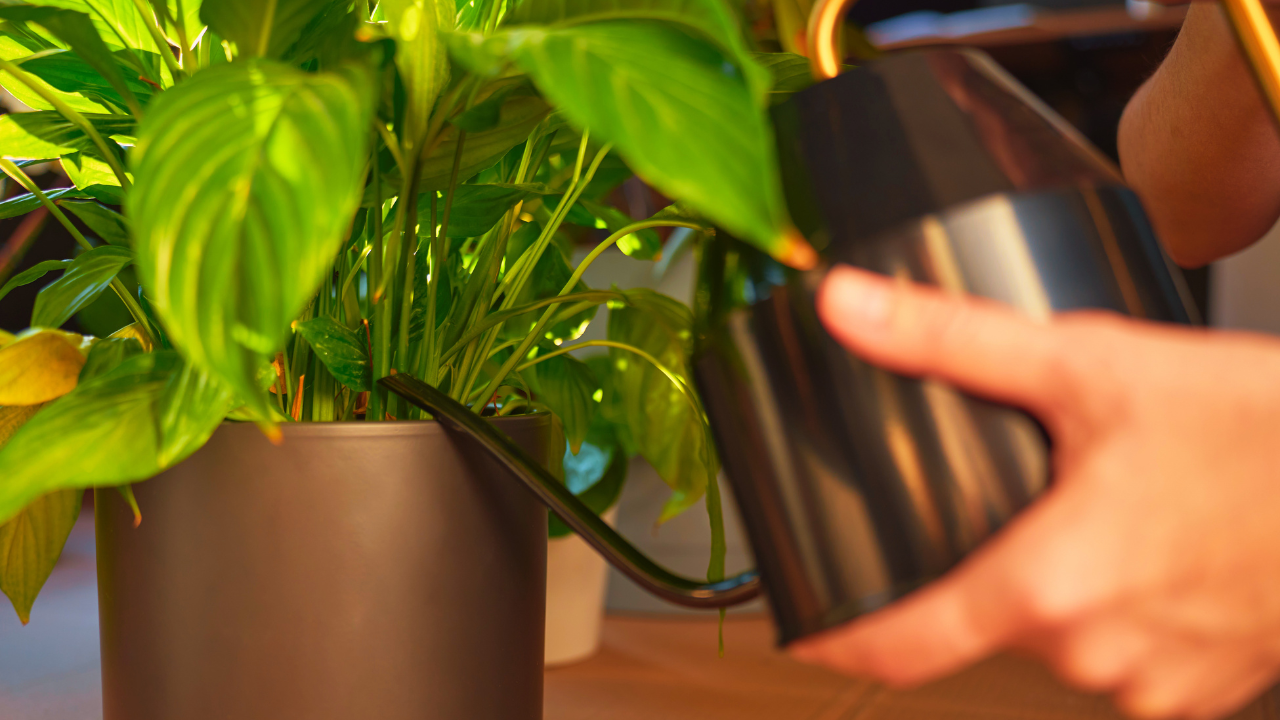
Some forms of care are easy to overlook because they sit quietly without asking for anything.
They exist in the background of our days—quiet, recurring, and often uncomplicated. A small check as you pass by. A pause that lasts only a few seconds. Attention that doesn’t feel like effort, but still makes a difference over time.
Caring for houseplants isn’t something most of us learn in a single moment or are formally taught about. There’s no perfect system that works the same way every time, no fixed schedule that guarantees everything will thrive. Instead, it becomes something we grow into slowly, shaped by observation and repetition more than instruction.
We might follow general advice—water once a week, place near a window, avoid too much direct sun—but still find ourselves second-guessing. Is it too much? Not enough? Are the leaves supposed to look like this?
These questions disappear gradually, as we spend more time with the plants in our care.
We begin to notice small things.
The way the soil looks when it’s fully dry compared to when it still holds a bit of moisture. How the weight of a pot changes in our hands. The subtle shift in the angle of a leaf reaching toward the light. These observations form an understanding.
Each time we return to water, to adjust, or simply to look a little closer, we refine that understanding. We start to recognize patterns—not perfectly, but well enough to respond with more confidence than before. What once felt like guesswork becomes something steadier, guided by familiarity.
There is room, too, for getting it wrong.
Most people who care for houseplants have, at some point, given too much water or not enough. We’ve missed the signs, or noticed them too late. But even these moments become part of the process. They teach us how to adjust, how to pay closer attention, how to approach the next time with a little more awareness.
Over time, the care itself begins to change.
It becomes less about following rules and more about responding to what’s in front of us. Less about doing everything “right,” and more about staying present enough to notice what each plant needs in that moment.
There is something reassuring in that shift.
Because it reminds us that care doesn’t need to be perfect to be effective. It only needs to be consistent. Gentle. Willing to return again and again, even in small ways.
The story below moves through these moments of care—unhurried, attentive, and shaped by the learning that comes not from knowing everything, but from noticing a little more each time.
🆓 Join The Slow Life newsletter to receive the FREE Slow Morning micro-experience when you sign up. 🌿 Sign up HERE 🌿
🎧 💜 Prefer to listen instead of read? - Listen to the podcast version of “Watering the Indoor Houseplants” HERE 📖
🕯 💜 SHOP The Slow Life HERE 💌
This story is called Watering the Indoor Houseplants, and it’s about a caring habit, staying present, and rain as a reminder.
I’ve found something close to a rhythm now—watering day landing on Sunday mornings, just after breakfast, when the house is still quiet.
It isn’t a strict rule, but it happens often enough that I don’t need to think about it anymore. The reminder comes naturally, usually when I wander through my rooms with my tea.
Today, the reminder arrives with the sound of rain tapping steadily against the glass.
The kettle has already been emptied into my mug, the last of the tea still hot as I come back into the kitchen. I set it down on the counter, then reach under the sink for the watering can I keep tucked to one side.
I fill it slowly, adjusting the tap so the water runs gently instead of splashing around the edge. The sound is steady as it rises, covering the rain for the moment.
When it’s nearly full, I turn it off and hold it by the handle and the long spout to keep it steady, enjoying the weight of it.
I always start in the same place.
Three plants near the front window of the living room sit on a low bookshelf, arranged with two to one side and the larger one on its own to the right. I lift the first pot just enough to feel its weight.
It’s not completely dry, but dry enough.
I tilt the watering can, letting the stream fall slowly onto the soil instead of directly against the stems. The surface darkens in stages, the water soaking in rather than pooling. I wait between pours, giving it time to drink.
This one was a gift—brought over in a paper bag, the rim of the pot wrapped in tissue that had come loose by the time it reached my hands. I remember moving the two smaller plants together to make room for it, unsure if it would stay in this spot or be moved if it didn’t thrive here. The leaves were thinner then, slightly uneven.
Now they’re fuller, spreading outward, letting me know it likes the place I chose for it.
I rotate the pot a few inches to even out its lean toward the sun.
The next one had nearly been lost once, before I’d gotten into the habit of watering on a regular day.
The soil had pulled away from the edge of the pot, but I’d missed it in my sporadic watering schedule. I then overcorrected by giving it too much for a few days, but since then I’ve learned how to care for it.
I tip the watering can again, slower this time, letting the water reach deeper. A small amount collects in the saucer beneath, and I leave it there for now, knowing it will be absorbed.
I brush one of the leaves between my fingers before turning it a bit.
The rain has picked up, tapping more firmly now, filling the space without overwhelming it.
I move to the taller plant near the corner.
This one I chose myself, on a day that hadn’t seemed important at the time. I had gone out for something else — something practical — and came back with it balanced awkwardly in the back seat, one hand reaching behind me at every stop to keep it from tipping.
It may have felt like an unnecessary purchase then, but now it anchors the room.
I check it with my fingers before watering, pressing just below the surface. It’s still slightly damp, so I add only a small amount, circling the outer edge of the soil.
It took time for me to learn that not everything needs the same attention.
I stand, shifting the watering can to my other hand, and take a few steps back to look at the arrangement as a whole. It isn’t perfectly even. Some leaves lean further than others, so I rotate this one too.
It works, and I move on.
In the bedroom, the air is cooler. The window is open just enough to let in the sound of the rain but not the wetness of it, a faint current of fresh air moving through the space.
There are fewer plants in here. One of them is newer, its leaves still adjusting to the place where it sits. I give it less than I think it might need, knowing that overwatering can be worse than letting it dry out for a while.
I move out to my reading nook at the end of the hallway. A handful of tiny pots sit on bookshelves and windowsills.
I lift them carefully, knowing their weights now at each level of dryness. I add small amounts of water, smiling with pride at the consistency of care I’ve learned to give them.
Their story started last fall when I decorated this reading space, and they were the final touch I’d been missing.
The stream of water thins as I finish with the plants in the reading nook. I tilt the can once more, but it’s already empty.
Back in the kitchen, I don’t need to fill it all the way for the last few plants waiting here.
I start with the one that hangs beside the window above the sink, its leaves catching a bit of light even through the grey sky. The water disappears quickly into the soil, and I slow my hand to match it.
Now for the plants on the island. One is propped up on a small stand so they sit at different heights.
Each one gets just enough, a small pause between pours.
The one on the fridge is last — a hardy breed that doesn’t need much sun.
When I’m done, I put the watering can back under the sink.
Outside, the rain continues to water everything in the yard and across the village.
I pick up my mug from the counter again, still warm, and sit on a stool for a moment without doing anything else.
Some weeks, the soil dries faster. Some weeks, it doesn’t. Some plants need more. Others need less. The rhythm shifts a bit each time, just enough that I have to stay present to what each one needs. I don’t need to be perfect — just consistent with the habit.
I wish you sweet dreams.
🆓 Join The Slow Life newsletter to receive the FREE Slow Morning micro-experience when you sign up. 🌿 Sign up HERE 🌿

💃 Wear the Thing: Enjoying What You Love Without Explaining Yourself